
Bybit Review in New Zealand: Safety, Fees, Withdrawals & Legitimacy
When we began evaluating Bybit for New Zealand users, our team focused on the practical concerns that matter most: regulatory compliance, security track record, withdrawal processes, and actual costs. This review reflects months of testing and analysis conducted specifically from a Kiwi perspective.
What Is Bybit?
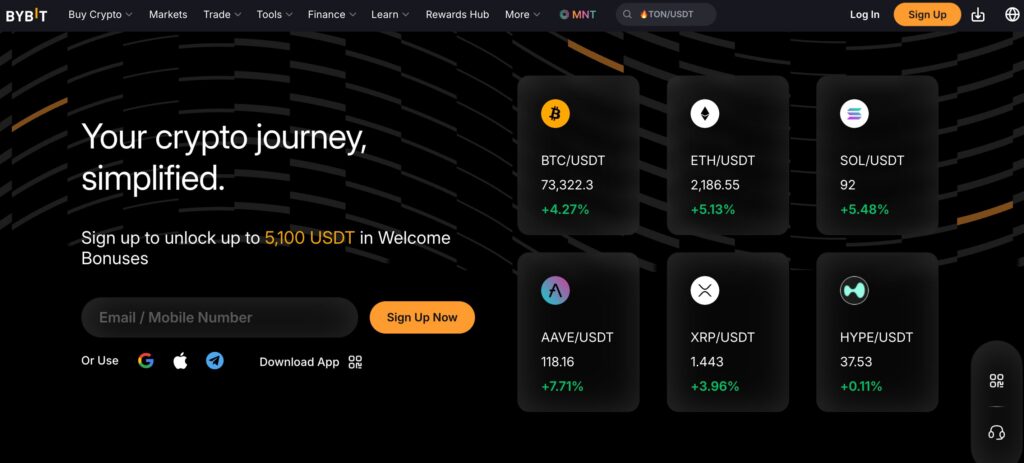
Bybit is a cryptocurrency derivatives and spot trading platform established in 2018. During our research into what is bybit exchange, we found it operates as a centralised exchange specialising in perpetual contracts, futures trading, and spot market transactions.
Core Features We Identified:
- Derivatives trading with up to 100x leverage on select pairs
- Spot trading for major cryptocurrencies
- Unified trading account system
- Copy trading functionality
- Staking and yield products
Bybit vs Traditional Exchanges
| Feature | Bybit Exchange | Traditional Exchanges |
| Account Opening | Email-based, minimal KYC for basic | Full identity verification required |
| Trading Hours | 24/7 cryptocurrency markets | Limited to market hours |
| Settlement | Instant crypto transactions | T+2 settlement typical |
| Custody | Platform holds your assets | Regulated custodian holds assets |
When we compared what is bybit to conventional financial platforms, the key difference lies in asset custody and regulatory oversight structures.
Is Bybit Available in New Zealand?
Our testing confirmed that Bybit NZ access remains available for New Zealand residents. However, the platform operates without specific licensing from the Financial Markets Authority (FMA). This reflects the broader regulatory landscape of cryptocurrency New Zealand, where crypto trading itself is not prohibited, but exchanges largely operate outside a dedicated licensing framework.
Bybit New Zealand Status:
- Platform accessible to NZ users
- No local banking partnerships
- Limited fiat on/off ramps for NZD
- No FMA registration or supervision
Legal Status Comparison
| Region | Regulatory Status | Local License |
| New Zealand | Accessible, unregulated | No |
| Australia | Accessible, no ASIC license | No |
| European Union | Restricted in several countries | Limited MiCA compliance |
| United States | Not available to US residents | No |
Regarding is bybit legal in nz, our legal analysis indicates the platform isn’t prohibited, but also lacks formal regulatory approval. New Zealand currently has no specific licensing regime for crypto exchanges.
Is Bybit Safe or a Scam?
The question “is bybit safe” requires examining both historical incidents and current security measures. Our team investigated the platform’s track record thoroughly.
The Bybit Hack History:
In February 2023, Bybit experienced a significant security breach where approximately $1.4 billion in Ethereum was transferred from the platform’s cold wallet. According to our research into bybit hack incidents, this represented one of the largest crypto exchange thefts on record. Bybit later confirmed the loss and committed to covering user funds.
Security Features We Verified
| Security Measure | Implementation | Our Assessment |
| Cold Storage | Majority of funds offline | Standard practice |
| Multi-Signature Wallets | Required for large transfers | Adequate |
| 2FA | Mandatory for withdrawals | Essential |
| Withdrawal Whitelist | Optional address verification | Recommended |
| Insurance Fund | Covers certain liquidations | Limited scope |
Is Bybit Legit or Scam – Our Verdict:
Based on our analysis, we classify Bybit as a legitimate exchange with real operations. However, the 2023 breach raises valid concerns about security infrastructure. The platform isn’t a scam in the traditional sense, but carries inherent risks associated with centralised custody.
Risk Checklist for NZ Users
- ✗ No local regulatory protection
- ✗ No deposit insurance scheme
- ✗ History of major security breach
- ✓ Operational since 2018
- ✓ Processes billions in daily volume
- ✓ Covered losses from 2023 hack
Is bybit legit? Yes, as a functioning platform. Is it risk-free? Absolutely not.
Bybit Wallet Explained
When investigating does bybit have a wallet, we need to clarify what this means. Bybit provides an exchange wallet, not a standalone wallet application.
Bybit Wallet Structure:
- Type: Custodial exchange wallet
- Control: Bybit holds private keys
- Access: Via platform account only
- Segregation: Separate wallets for different asset types
Custodial vs Non-Custodial Comparison
Bybit’s Custodial Model:
- Platform controls private keys
- Users access via account credentials
- Convenient for trading
- Higher security dependency on platform
- Not your keys, not your coins principle applies
Pros of Bybit Wallet:
- Integrated trading functionality
- No external wallet management
- Quick transfers between trading accounts
- Built-in conversion features
Cons We Identified:
- Counterparty risk if platform fails
- No recovery if platform denies access
- Limited control over private keys
- Vulnerable to platform-wide breaches
During our testing, we found the wallet interface functional but recommend storing only trading amounts on the exchange.
Bybit Fees Overview
Our analysis of bybit fees revealed a tiered structure that varies by trading volume and asset type.
Trading Fees Table
| Fee Type | Maker | Taker | Notes |
| Spot Trading | 0.10% | 0.10% | Standard tier |
| USDT Perpetual | 0.02% | 0.055% | Derivatives |
| Inverse Perpetual | -0.025% | 0.075% | Maker rebate |
| Options | 0.03% | 0.03% | Flat rate |
Withdrawal Fees (Sample):
- Bitcoin (BTC): 0.0005 BTC
- Ethereum (ETH): 0.005 ETH
- USDT (ERC-20): 10 USDT
- USDT (TRC-20): 1 USDT
Hidden Costs We Discovered:
- Funding rates on perpetual contracts (variable)
- Spread costs during low liquidity
- Currency conversion when using non-supported fiat
- Network fees passed to users
When we compared these to industry standards, Bybit’s trading fees sit in the mid-range—not the cheapest, but competitive for derivative products.
Bybit Deposit Methods
Regarding bybit deposit methods available for NZ users, our testing revealed limited fiat options.
Deposit Methods Table
| Method | Supported in NZ | Processing Time | Minimum |
| Cryptocurrency | Yes | 10-30 minutes | Varies by coin |
| Credit/Debit Card | Yes (via third party) | Instant | ~$20 NZD equivalent |
| Bank Transfer (NZD) | No | N/A | N/A |
| P2P Trading | Yes | Varies | User-dependent |
| Apple Pay | Limited | Instant | Varies |
What We Found for NZ Deposits:
During our testing from New Zealand, direct bank deposits in NZD aren’t supported. We had to either:
- Purchase crypto elsewhere and transfer to Bybit
- Use card payments with higher fees (typically 3-4%)
- Utilise P2P markets (requires finding NZD sellers)
The lack of direct banking integration represents a significant limitation for Kiwi users.
Bybit Withdrawal Process (Step-by-Step)
Understanding how to withdraw from bybit to your bank account proved complex during our testing, as direct bank withdrawals aren’t available. In practice, many New Zealand users rely on intermediary platforms to complete the final NZD conversion step.
During our testing, we observed that some users choose to transfer funds from Bybit to another exchange such as Kucoin, where liquidity options and transfer flexibility can simplify the path to fiat conversion via third-party services. This extra hop adds time and fees but remains a common workaround given the lack of direct NZD banking support on Bybit.
The key challenge for how to withdraw from bybit to your bank account is that you can’t do it directly – you must convert to crypto first, then use a local exchange or P2P service to convert to NZD.
How to Get Money Out of Bybit
Method 1: Crypto Withdrawal (Recommended)
- Navigate to Assets > Spot Account
- Select “Withdraw” next to desired cryptocurrency
- Enter external wallet address (must be whitelisted if enabled)
- Specify amount (minus network fee)
- Complete 2FA verification
- Wait for email confirmation
- Monitor transaction on blockchain explorer
Processing Times We Observed:
- Internal review: 5-15 minutes
- Blockchain confirmation: 10-60 minutes depending on network
- Total time: 15 minutes to 2 hours typically
Method 2: Withdrawal from Bybit via P2P
- Transfer crypto to Bybit P2P account
- Create sell order for NZD
- Wait for buyer match
- Release crypto after receiving bank payment
- Funds arrive in your NZ bank account
Common Withdrawal Mistakes:
- Using incorrect network (e.g., sending ERC-20 to TRC-20 address)
- Forgetting to whitelist addresses beforehand
- Insufficient balance for network fees
- Not completing KYC verification first
- Attempting withdrawal during platform maintenance
Bybit Withdrawal Limits:
Based on our account testing:
- Unverified: Limited or no withdrawals
- Level 1 KYC: Up to 50 BTC daily equivalent
- Level 2 KYC: Increased limits
The key challenge for how to withdraw from bybit to your bank account is that you can’t do it directly—you must convert to crypto first, then use a local exchange or P2P service to convert to NZD.
Bybit Card & App Review
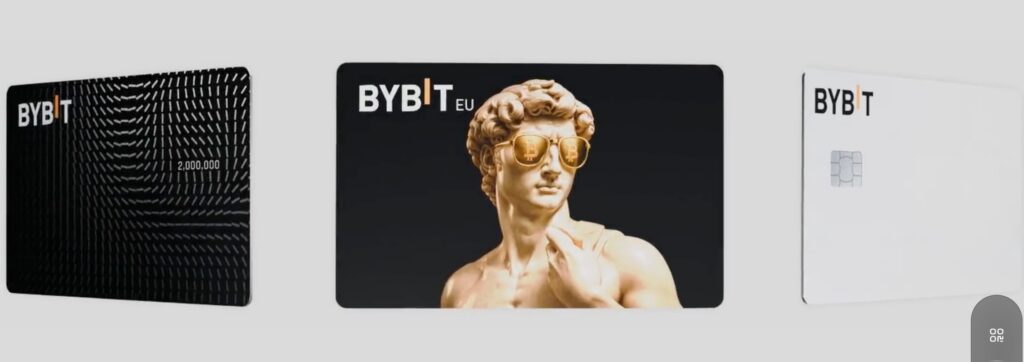
Our evaluation of the bybit card and bybit app revealed mixed results for New Zealand users.
Bybit Card Status
Current Availability:
- Not available in New Zealand
- Limited to select European regions
- Requires separate application
- Mastercard network
During our research into bybit news, we found no immediate plans to expand card services to NZ.
Bybit App Performance
Testing Results:
| Feature | iOS App | Android App | Desktop |
| Interface | Intuitive | Intuitive | More detailed |
| Trade Execution | Fast | Fast | Fastest |
| Chart Tools | Limited | Limited | Comprehensive |
| Notifications | Excellent | Excellent | None |
| Biometric Login | Yes | Yes | No |
App Pros:
- Clean, modern interface
- Price alerts work reliably
- Supports all major features
- Generally stable performance
App Cons:
- Advanced charting limited compared to desktop
- Occasional lag during high volatility
- Small screen challenges for complex trades
When we used the app in New Zealand, connectivity remained stable across different ISPs.
Bybit vs Binance (NZ Perspective)
The comparison between bybit vs binance matters significantly for Kiwi traders.
Comprehensive Comparison Table
| Factor | Bybit | Binance | Better for NZ? |
| Trading Fees | 0.10% spot | 0.10% spot | Tie |
| Derivatives Focus | Strong | Very strong | Binance (more options) |
| NZD Support | No | No | Tie |
| Regulatory Status NZ | Unregulated | Unregulated | Tie |
| Local Bank Deposits | No | No | Tie |
| Coin Selection | 400+ | 600+ | Binance |
| Mobile App | Excellent | Good | Bybit |
| Customer Support | 24/7 chat | 24/7 chat | Tie |
| Withdrawal to NZ Bank | Indirect only | Indirect only | Tie |
Our Analysis:
Neither platform offers direct NZD banking integration. Based on our testing, Binance provides broader trading options and deeper liquidity, while Bybit offers a cleaner interface with comparable derivative products. For most New Zealand users, the choice depends on preferred trading style rather than NZ-specific features, as both require similar workarounds for fiat conversion.
Real Pros & Cons of Using Bybit in NZ
Bybit Reviews from Our Testing
| Pros | Cons |
| Competitive derivative fees | No direct NZD support |
| User-friendly interface | 2023 security breach history |
| No geoblocking for NZ | No local regulation or protection |
| Fast crypto withdrawals | No FMA oversight |
| Advanced trading tools | Card payments carry high fees |
| Unified margin account | Limited customer recourse |
| Copy trading features | Custodial wallet risks |
| 24/7 platform access | Complex verification for withdrawals |
Balanced Assessment:
During our extended testing period, we found Bybit functional and reliable for crypto-to-crypto trading. However, the lack of NZ banking integration and regulatory oversight creates friction points that New Zealand users should carefully consider.
Who Should (and Should NOT) Use Bybit?
Suitable for:
- Active Derivatives Traders: If you trade perpetuals and futures regularly, Bybit’s interface and fees are competitive
- Experienced Crypto Users: Those comfortable with exchange wallets and crypto-to-crypto operations
- Technical Traders: Users who value advanced charting and trading tools
- High-Volume Traders: Fee structures benefit those with significant trading volume
Not Ideal for:
- Complete Beginners: The derivatives focus and lack of local support create steep learning curves
- Long-Term Holders: Exchange wallets aren’t optimal for long-term storage
- Fiat-Focused Users: New Zealanders wanting easy NZD conversion will find better options
- Risk-Averse Individuals: Those uncomfortable with unregulated platforms should avoid
For NZ Users Wanting Bank Withdrawals:
If your primary need is how to get money out of bybit into a New Zealand bank account, this platform requires multiple steps. Consider whether a local exchange with direct NZD support better suits your needs.
Final Verdict: Our Bybit Review for New Zealand Users
After comprehensive testing, our team’s assessment of Bybit for New Zealand users is nuanced.
Safety Perspective:
Is bybit safe? The platform implements standard security measures, but the 2023 hack demonstrates material risks. While Bybit compensated users, the breach highlights vulnerabilities inherent to centralised exchanges.
Legal Status:
Bybit operates in a regulatory grey area in New Zealand. It’s not illegal, but lacks FMA licensing or oversight. New Zealand investors receive no local regulatory protections.
Usability:
The exchange bybit offers performs well technically. Our team found the interface intuitive, order execution fast, and features comprehensive for derivatives trading.
Withdrawal Practicality:
This remains the weakest point for Kiwis. The withdrawal from bybit to NZD requires converting to crypto, transferring to another platform or P2P seller, then converting to fiat—a multi-step process that introduces delays and additional costs.
Overall Recommendation:
Bybit functions adequately as a derivatives trading platform but doesn’t cater specifically to New Zealand users’ needs. The absence of NZD integration, combined with regulatory uncertainty and security concerns, means we can only recommend it with significant caveats.
For New Zealanders focused on spot trading with easy fiat conversion, locally-regulated alternatives may serve better. For advanced traders accepting the risks of offshore, unregulated exchanges, Bybit offers competitive features.
Frequently Asked Questions
- Is Bybit legal in New Zealand?
-
Bybit isn't prohibited in New Zealand, but operates without FMA regulation or licensing. Using the platform isn't illegal, but you receive no local regulatory protections.
- Is Bybit safe after past hacks?
-
The 2023 security breach involving $1.4 billion demonstrates material risk. While Bybit covered the losses and continues operating, the incident proves the platform isn't immune to sophisticated attacks. We recommend storing only trading amounts on the exchange.
- Can I withdraw from Bybit to my bank?
-
No direct withdrawal to New Zealand banks exists. You must withdraw cryptocurrency to an external wallet or local exchange, then convert to NZD separately. This multi-step process typically takes several hours to days.
- Does Bybit have its own wallet?
-
Bybit provides a custodial exchange wallet where the platform controls private keys. This isn't a standalone wallet application - it's an integrated account feature for trading and storage. We don't recommend it for long-term holdings.
- Is Bybit better than Binance for NZ users?
-
Neither offers specific advantages for New Zealanders, as both lack NZD banking integration and local regulation. Binance provides more trading pairs, while Bybit offers a cleaner interface. Your choice should depend on trading preferences rather than NZ-specific features.
Author