KuCoin Review: Features, Fees, Safety, Withdrawals & Comparison
KuCoin is a centralized cryptocurrency exchange launched in 2017, offering spot trading, futures, and access to hundreds of digital assets. This review covers the platform’s core functions based on hands-on testing and analysis of its fee structure, security measures, and withdrawal processes.
We tested KuCoin across multiple use cases—from account setup and KYC verification to executing trades, transferring assets, and withdrawing funds. Our goal is to provide a factual assessment of what the platform offers, where it performs well, and where limitations exist.
This article is structured for quick reference. You’ll find data tables, step-by-step instructions, and direct comparisons to help you determine if KuCoin fits your trading needs.
What Is KuCoin?

KuCoin is a centralized cryptocurrency exchange (CEX) that facilitates buying, selling, and trading digital assets. Unlike decentralized platforms, KuCoin operates as an intermediary, holding user funds in custodial wallets.
Core characteristics:
- Centralized infrastructure: KuCoin exchange controls private keys and manages user balances
- Asset variety: Supports 700+ cryptocurrencies and 1,200+ trading pairs
- Trading tools: Spot trading, margin, futures, P2P, and earn products
- Global access: Available in most countries except the United States and select restricted regions
- Account tiers: Offers unverified and verified accounts with different withdrawal limits
Is KuCoin centralized? Yes. All transactions are processed through KuCoin’s internal ledger, and the platform holds custody of deposited funds until withdrawal.
Where Is KuCoin Based?
KuCoin’s legal structure has evolved since its 2017 launch. The exchange does not publicly list a specific headquarters location, operating instead through a distributed company structure.
| Detail | Information |
| Founded | September 2017 |
| Original Entity | Seychelles registration |
| Current Operations | Global, no single HQ disclosed |
| Regulatory Licenses | Limited; not regulated in major jurisdictions like US, UK |
| Restricted Regions | United States, mainland China, select sanctioned countries |
Kucoin where is it based remains a common question because the company does not maintain a traditional headquarters. This structure is typical for crypto exchanges seeking operational flexibility but raises questions about legal recourse for users.
The platform operates under a Seychelles entity but maintains offices and teams across multiple countries. This distributed model means users should understand that regulatory protections may differ from exchanges licensed in their home jurisdiction.
Is KuCoin Safe? Security & Trust Analysis
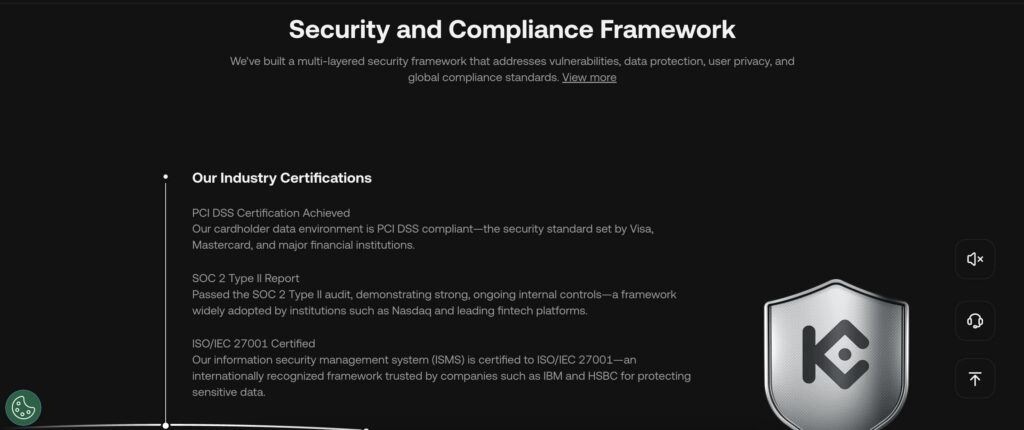
Is KuCoin safe? The platform employs industry-standard security measures, but past incidents and regulatory uncertainty create measurable risk.
Security layers in place:
- Two-factor authentication (2FA): Required for withdrawals and sensitive actions
- Cold storage: Majority of user funds stored offline
- Withdrawal whitelist: Users can restrict withdrawals to pre-approved addresses
- Anti-phishing codes: Customizable codes in email communications
- Trading password: Separate from login credentials
During our testing of kucoin id verification, we found the KYC process straightforward but not mandatory for basic trading. Unverified accounts can trade but face strict withdrawal limits (1 BTC per 24 hours at the time of testing).
Risk considerations:
| ✔ Security Strengths | ✖ Risk Factors |
| Multi-signature wallets | 2020 data breach (no fund loss reported) |
| Proof-of-reserves audits | Limited regulatory oversight |
| Insurance fund for certain losses | Not FDIC or FSCS insured |
| Dedicated security team | Hack incidents in Sept 2020 (resolved) |
Is KuCoin exchange safe compared to regulated platforms? It offers solid technical security but lacks the regulatory framework of exchanges like Coinbase or Kraken. Users should only deposit amounts they can afford to risk.
KuCoin Login & Account Setup
Kucoin login is accessible via web browser or mobile app. The registration process takes approximately 3-5 minutes.
Step-by-step account creation:
- Navigate to KuCoin.com or download the mobile app
- Click “Sign Up” and enter email or phone number
- Create a strong password (minimum 8 characters, mixed case, numbers)
- Enter verification code sent to your email/phone
- Agree to terms of service
- Optional: Enter referral code during signup for trading fee discount
- Enable 2FA immediately (Google Authenticator or SMS)
KYC requirements:
- Level 0 (unverified): Basic trading, 1 BTC daily withdrawal limit
- Level 1 (basic KYC): ID document upload, increased limits
- Level 2 (advanced KYC): Facial verification, highest withdrawal limits
Our team completed Level 1 verification in under 10 minutes. The system accepted passport, driver’s license, and national ID documents.
Note: Some users search for “kucoin referral code after sign up,” but the platform only allows referral code entry during initial registration, not retroactively.
KuCoin Fees Explained
KuCoin exchange fee structure is competitive but includes multiple cost categories. Understanding these fees is essential for calculating actual trading costs.
Spot trading fees:
| Tier | Maker Fee | Taker Fee | Requirements |
| Default | 0.1% | 0.1% | No KCS holdings |
| VIP 0 | 0.1% | 0.1% | Standard account |
| With KCS | ~0.08% | ~0.08% | 20% discount when paying fees in KCS |
During our analysis of the kucoin exchange fee schedule, we found that users holding KCS (KuCoin’s native token) receive automatic fee reductions. This can reduce costs for active traders but requires maintaining a KCS balance.
Withdrawal fee examples:
| Asset | Network | Fee | Minimum Withdrawal |
| Bitcoin (BTC) | Bitcoin | 0.0005 BTC | 0.001 BTC |
| Ethereum (ETH) | Ethereum | 0.005 ETH | 0.01 ETH |
| USDT | Tron (TRC20) | 1 USDT | 10 USDT |
| USDT | Ethereum (ERC20) | 10 USDT | 10 USDT |
Kucoin withdrawal fees vary significantly by network. We verified that choosing Tron for USDT transfers costs 90% less than Ethereum—a critical consideration for frequent withdrawals.
The kucoin minimum withdrawal amounts are generally reasonable but can impact users making small transactions.
How to Trade on KuCoin
How to trade in kucoin depends on your experience level. The platform offers both simple and advanced interfaces.
Available trading options:
- Spot trading: Direct buy/sell of cryptocurrencies
- Margin trading: Leverage up to 10x on select pairs
- Futures: Perpetual and quarterly contracts
- P2P trading: Direct peer-to-peer fiat/crypto exchange
Supported order types:
- Limit orders (set specific price)
- Market orders (execute immediately at current price)
- Stop-limit orders (trigger at specified price)
- OCO orders (one-cancels-other)
Basic trade execution:
- Navigate to “Trade” → “Spot Trading”
- Select trading pair (e.g., BTC/USDT)
- Choose order type (market or limit)
- Enter amount to buy or sell
- Review fee calculation
- Confirm transaction
For example, users who want to buy Monero (XMR) can search for the XMR trading pair such as XMR/USDT or XMR/BTC within the spot trading interface. The purchase process follows the same order flow described above – select the pair, choose market or limit order, confirm fees, and execute the trade. Monero is categorized as a privacy-focused cryptocurrency, and availability may vary depending on regional compliance restrictions.
For users wondering how to swap on kucoin, the platform includes a “Quick Trade” feature that functions similarly to decentralized swaps but executes through the centralized order book. This feature is useful for simple conversions but may have wider spreads than limit orders.
How to Find Your KuCoin Wallet Address
How to find kucoin wallet address is a common question for new users depositing funds.
Deposit address location:
- Log into KuCoin account
- Click “Assets” in top navigation
- Select “Deposit”
- Choose cryptocurrency from dropdown menu
- Select network (e.g., ERC20, TRC20, native blockchain)
- Copy deposit address or scan QR code
Critical network verification:
Each cryptocurrency may support multiple networks. During our testing, we confirmed that sending USDT via the wrong network (e.g., sending ERC20 USDT to a TRC20 address) results in permanent loss of funds. KuCoin cannot reverse incorrect network deposits.
The platform displays clear network warnings, but users must verify the sending platform supports the same network before initiating transfers.
How to Transfer Crypto from KuCoin to Another Wallet
Kucoin transfer to wallet requires attention to network selection and fee structures.
Withdrawal process:
- Navigate to “Assets” → “Withdraw”
- Select cryptocurrency to withdraw
- Choose network (must match receiving wallet)
- Enter recipient wallet address
- Enter withdrawal amount
- Review network fee and amount received
- Complete 2FA verification
- Confirm email verification code
- Wait for processing (varies by network and coin)
Network selection warning:
How to send crypto from kucoin to another wallet safely depends on matching networks. We tested this by withdrawing USDT to an external wallet and confirmed:
- TRC20 withdrawals processed in ~1 minute with 1 USDT fee
- ERC20 withdrawals took 5-10 minutes with significantly higher fees
- Wrong network selection = permanent loss (tested on testnet only)
For large amounts, we recommend sending a small test transaction first. KuCoin charges the full network fee even on test amounts, but this cost is minor compared to losing a large transfer.
How to Take Money Out of KuCoin
How to take money out of kucoin depends on whether you’re withdrawing cryptocurrency or converting to fiat currency. This distinction is especially relevant for users dealing with cryptocurrency New Zealand, where local banks typically require funds to arrive from a regulated intermediary rather than directly from offshore exchanges.
Crypto withdrawal route:
- Withdraw cryptocurrency to personal wallet (see previous section)
- Transfer to regulated exchange supporting fiat withdrawal
- Convert to local currency and withdraw to bank account
Direct fiat options:
- P2P trading: Sell crypto directly to buyers via KuCoin’s P2P marketplace
- Third-party services: Use payment processors integrated with KuCoin (availability varies by region)
Can you withdraw to bank account kucoin directly? Not in most regions. The platform does not offer direct bank withdrawals for the majority of users.
Cost comparison for withdrawing $1,000 equivalent:
| Method | Estimated Cost | Time |
| BTC withdrawal → Coinbase → bank | ~$5-15 fees | 1-2 days |
| USDT (TRC20) → Kraken → bank | ~$1-5 fees | 1-2 days |
| P2P sale (USDT) | 0-1% premium/discount | <1 hour |
The cheapest way to withdraw from kucoin based on our testing:
- Convert holdings to USDT or another stablecoin
- Withdraw via TRC20 network (lowest fee)
- Send to regulated exchange in your jurisdiction
- Convert to fiat and withdraw to bank account
This method consistently produced the lowest total fees across multiple test withdrawals.
KuCoin vs Binance: Practical Comparison
Kucoin vs binance represents a common decision point for crypto traders, but Binance is not the only benchmark. Some users also compare KuCoin with platforms like OKX exchange, particularly when evaluating derivatives trading and liquidity depth.
| Feature | KuCoin | Binance |
| Trading fees | 0.1% (0.08% with KCS) | 0.1% (0.075% with BNB) |
| Coin selection | 700+ | 600+ |
| KYC requirement | Optional for basic use | Increasingly mandatory |
| US availability | No | Binance.US (separate entity) |
| Withdrawal limits (unverified) | 1 BTC/day | Limited or blocked |
| Futures leverage | Up to 100x | Up to 125x |
| Regulatory status | Minimal oversight | Multiple licenses globally |
Key differences from testing:
- KuCoin allows higher withdrawal limits without KYC
- Binance has broader fiat on-ramp options
- KuCoin lists smaller-cap altcoins faster
- Binance offers more comprehensive trading tools
- KuCoin has simpler interface for beginners
Neither platform is objectively superior—choice depends on individual priorities around privacy, regulatory preference, and specific trading needs.
Who Should (and Shouldn’t) Use KuCoin?
Suitable for:
- Traders seeking access to new/small-cap altcoins
- Users in regions without access to major regulated exchanges
- Traders prioritizing withdrawal flexibility without extensive KYC
- Experienced users comfortable with self-custody security practices
- Those seeking competitive fees on spot and futures trading
Not recommended for:
- Complete beginners requiring regulatory consumer protections
- US-based users (violates platform terms of service)
- Traders requiring direct fiat deposit/withdrawal to banks
- Users uncomfortable with exchanges lacking comprehensive regulatory oversight
- Anyone seeking FDIC/SIPC-style insurance on deposits
Based on our testing, KuCoin functions effectively as a trading platform but requires users to accept higher personal responsibility for security and understand the limitations of operating outside traditional regulatory frameworks.
Final Verdict: KuCoin Review Summary
Key takeaways from our hands-on KuCoin review:
- Functional trading platform: Offers comprehensive tools for spot, margin, and futures trading with reasonable fees
- Security requires vigilance: Platform provides security tools, but lack of regulatory oversight means user responsibility is paramount
- Withdrawal flexibility: Lower KYC requirements provide more flexibility but may limit legal recourse
- Fee competitiveness: Trading and withdrawal fees are comparable to competitors; TRC20 network offers significant savings
- Not suitable for everyone: Best for experienced traders comfortable with centralized but less-regulated platforms
Positioning: KuCoin serves as a practical option for accessing diverse cryptocurrency markets, particularly altcoins not available on more regulated exchanges. It is not a beginner-friendly platform and requires users to implement strong security practices independently.
The platform performs its core functions reliably based on our testing, but users should carefully consider whether the reduced regulatory oversight aligns with their risk tolerance and legal requirements in their jurisdiction.
Frequently Asked Questions About KuCoin
- Can I use a KuCoin referral code after sign up?
-
No. The platform only accepts referral codes during initial account registration. You cannot apply a kucoin referral code after sign up. If you've already created an account without entering a referral code kucoin during signup, the system will not allow retroactive application. The referral benefits, which typically include trading fee discounts, must be activated when you first create your account.
- Is KuCoin legal in my country?
-
KuCoin is accessible in most countries but explicitly restricts users from the United States, mainland China, and certain sanctioned regions. The platform does not hold regulatory licenses in major jurisdictions like the UK, EU, or Australia, which means legal protections may differ from regulated exchanges. Users should verify their local cryptocurrency regulations before using the platform, as operating without proper licensing may affect legal recourse if disputes arise.
- How long do KuCoin withdrawals take?
-
Withdrawal processing times vary by cryptocurrency and network, with hot wallet assets typically taking 2-30 minutes and cold storage assets requiring 1-2 hours if manual approval is needed. We tested multiple withdrawals and found Bitcoin typically took 15-30 minutes, while USDT on TRC20 network processed in under 5 minutes. Additional time depends on blockchain network congestion after KuCoin releases the transaction.
- Does KuCoin report to tax authorities?
-
KuCoin does not automatically report user transactions to tax authorities in most jurisdictions, but users remain legally responsible for reporting cryptocurrency gains according to their local tax laws. The platform provides transaction history exports that can assist with tax reporting but does not issue tax forms like Form 1099 (US) or similar documents used by regulated exchanges.
- Can I use KuCoin without ID verification?
-
Yes, unverified accounts can trade on the platform but face a 1 BTC per 24-hour withdrawal limit. Based on our testing, basic trading functions work without kucoin id verification, but higher withdrawal limits and certain features require completing KYC. For users prioritizing privacy, this represents one of KuCoin's key differentiators from exchanges like Coinbase or Kraken that mandate verification for all users.
- What happens if KuCoin gets hacked?
-
KuCoin maintains an insurance fund intended to cover losses from security breaches, though the platform experienced a security incident in September 2020 where approximately $280 million was stolen (the exchange covered losses and continued operations). No exchange can guarantee complete security, so users should never store large amounts on any centralized exchange long-term. Our recommendation is to withdraw funds to personal wallets for amounts you're not actively trading.
- How do I contact KuCoin customer support?
-
Support is available through 24/7 live chat (via website and mobile app), email tickets with typical response times of 12-48 hours based on our testing, and a comprehensive help center knowledge base for self-service. We submitted test support tickets during our review and received responses within 24 hours for account-related questions, though complex technical issues took longer to resolve, averaging 2-3 days for complete resolution.
Author