
Pay It Now in New Zealand – 2026 Overview
Pay It Now has emerged as New Zealand’s largest blockchain-based payment network since its 2021 launch in Christchurch. The platform combines cryptocurrency exchange functionality with real-world spending capabilities, serving over 300 businesses across New Zealand and Australia. Understanding what is pay it now requires examining its role as both a digital asset processor and merchant payment solution designed specifically for the Australasian market.
The service addresses a fundamental challenge in the crypto space: converting digital assets into everyday purchases without complex off-ramping processes. NZ residents researching crypto currency NZ topics often end up comparing local payment networks like Pay It Now against traditional exchanges and standard bank rails, especially when the focus is day-to-day spending rather than trading.
This analysis examines the platform’s operational framework, security protocols, fee structures, and practical applications within New Zealand’s regulatory environment. The content draws from publicly available documentation, regulatory filings, and technical specifications to provide an objective assessment of the service.
What Is Pay It Now?

Pay It Now (commonly abbreviated as PIN) functions as a Financial Services Provider registered in New Zealand under FSD number 1002374. The platform operates as a blockchain innovator offering three primary services: cryptocurrency exchange operations, merchant payment processing, and digital wallet functionality through the PIN Network App.
The service emerged from a gap identified by founders Craig and Jitendra Maharaj during the 2019-2020 pandemic period. Both former aviation professionals observed that existing crypto payment infrastructure in New Zealand was fragmented, expensive for merchants, and impractical for everyday transactions. Their response was to build a Layer-2 blockchain network specifically designed for the Australasian market.
Unlike traditional cryptocurrency exchanges that focus solely on trading, what is pay it now encompasses a broader ecosystem. The platform enables users to purchase over 50 supported cryptocurrencies, convert them to NZD through compliant on-ramp/off-ramp processes, and spend them at participating merchants via the Web3 Mastercard issued in partnership with Immersve.
Key Distinction from Traditional Banking:
| Feature | Pay It Now | Traditional NZ Banks |
| Transaction Type | Crypto-to-fiat conversion | Fiat-only transfers |
| Settlement Speed | 0.5 seconds (merchant claims) | 1-3 business days (standard) |
| Merchant Fees | 0.5% | 1.5-5% (credit cards) |
| Network Type | Layer-2 blockchain | Centralized banking rails |
The platform targets two distinct user groups in New Zealand: individuals seeking to use cryptocurrency for everyday purchases, and businesses wanting to accept digital asset payments without exposure to volatility or accounting complexity. All merchant transactions settle in New Zealand dollars, regardless of the cryptocurrency used by the customer.
How Does Pay It Now Work?
The operational framework of how does pay it now work consists of four stages that occur within seconds of transaction initiation. Understanding this process is essential for evaluating the platform’s practical utility in New Zealand’s payment ecosystem.
Transaction Process Flow:
- Initiation: User selects payment method (in-app transfer, Web3 Mastercard, or QR code) and specifies the amount in NZD. The app calculates the equivalent cryptocurrency value based on current exchange rates, applying the platform’s spread.
- Confirmation: The transaction request routes through Pay It Now’s Layer-2 network rather than the primary blockchain. This architectural choice eliminates traditional gas fees that would otherwise apply to Ethereum or Polygon network transactions. The user confirms the exchange rate and total amount.
- Processing: The platform’s conversion engine executes the crypto-to-fiat exchange through its liquidity pools. For merchant transactions, this happens instantaneously. The Layer-2 infrastructure allows the network to process transactions without waiting for blockchain confirmation from external validators.
- Settlement: For merchant payments, NZD arrives in the business’s account within the claimed 0.5-second timeframe. Users spending through the Web3 Mastercard experience a similar flow, with Immersve’s infrastructure handling the point-of-sale conversion globally wherever Mastercard is accepted.
Transaction Types Supported:
- In-app peer-to-peer transfers between PIN users
- Merchant point-of-sale payments (online and in-store)
- Web3 Mastercard spending (global acceptance)
- Bill payment functionality for invoices
- Cryptocurrency swaps between supported assets
The platform’s architecture separates the user experience from blockchain complexity. How does pay it now work from a technical perspective involves maintaining parallel balances: one on the Polygon network (for external compatibility) and one on the PIN Network’s Layer-2 solution (for internal transactions). This 1:1 mapping ensures users can move assets between networks while the system maintains consistent supply metrics.
Pay It Now App – Features and Availability in NZ
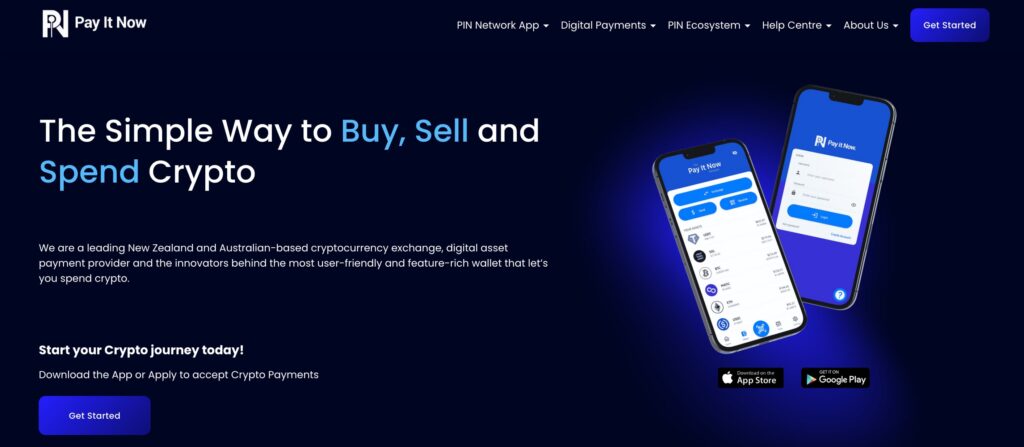
The pay it now app serves as the primary interface for all platform functionality. Launched in April 2022, the PIN Network App has undergone multiple iterations to expand its feature set beyond basic wallet operations. New Zealand residents can download the application from standard app stores for both iOS and Android devices.
Core App Functions:
- Cryptocurrency portfolio management across 50+ supported assets
- Buy/sell functionality with NZD bank account integration
- Web3 Mastercard ordering and fund management
- QR code payment generation for merchant transactions
- Promotional offers from 55+ New Zealand retail partners
- PIN token staking with real-time reward tracking
- Bill payment uploads for crypto-based invoice settlement
The pay it now app differentiates itself through integration with New Zealand’s banking infrastructure. Users connect their NZ bank accounts via the platform’s AML/KYC verification process, enabling direct fiat on-ramps without requiring international wire transfers or third-party processors. For users comparing ways to buy crypto New Zealand, this “local bank → app → crypto balance” flow is often the main decision factor versus platforms that rely on card payments or offshore transfers.
App Features Comparison:
| Feature | PIN Network App | Standard Crypto Wallets |
| NZ Bank Integration | Direct connection | Often unavailable |
| Spending Capability | Web3 Mastercard | Limited or none |
| Merchant Network | 300+ NZ/AU businesses | N/A |
| Gas Fees | None (Layer-2) | Variable (often high) |
| Local Currency | NZD primary | Often USD-focused |
Availability considerations for the pay it now app include regional restrictions and device compatibility. The service currently operates only in New Zealand and Australia, with planned expansion to the United Kingdom, United States, and Asia. Users outside these jurisdictions cannot access the full functionality, particularly the Web3 Mastercard issuance.
The application requires standard smartphone specifications and internet connectivity. Desktop access is available through the platform’s website for certain functions, though the mobile experience provides the most comprehensive feature access. Updates deploy regularly, with the development team based in Christchurch maintaining active development cycles.
Is Pay It Now Safe to Use?
Evaluating is pay it now safe requires examining both the platform’s security architecture and New Zealand’s regulatory framework for digital asset services. The service operates under Financial Services Provider registration, which imposes specific compliance obligations under the Anti-Money Laundering and Countering Financing of Terrorism Act 2009.
Regulatory Compliance Status:
The platform maintains AML compliance certification, positioning it as what the company describes as “the only AML compliant blockchain based digital payments system in operation in New Zealand.” This compliance status requires:
- Customer identity verification (KYC) during account creation
- Transaction monitoring for suspicious activity patterns
- Reporting obligations to the Department of Internal Affairs
- Record-keeping requirements for all financial transactions
Is pay it now safe from a regulatory perspective depends partly on user understanding that cryptocurrency services in New Zealand operate in a developing regulatory environment. The Financial Markets Authority (FMA) does not currently regulate cryptocurrency exchanges with the same rigor as traditional financial institutions, though this is expected to change as global standards evolve.
Security Infrastructure:
| Security Layer | Implementation | User Impact |
| Account Access | Multi-factor authentication | Required for login |
| Transaction Authorization | In-app confirmation | User confirms each payment |
| Fund Storage | Hot/cold wallet segregation | Reduces online exposure |
| Network Security | Layer-2 private blockchain | Controlled validator set |
The platform’s Layer-2 architecture provides security benefits and introduces different risk factors compared to public blockchains. Transactions don’t require external validator confirmation, which increases speed but concentrates control within Pay It Now’s infrastructure. This design choice means users trust the platform’s operational security rather than distributed network consensus.
Security Measures and User Responsibility
While technical safeguards operate at the platform level, is pay it now safe also depends on individual user practices. The company implements standard security protocols common to financial applications, but users maintain responsibility for several critical security elements.
User-Controlled Security Factors:
- Account Credentials: Strong password selection and secure storage fall entirely to the user. The platform cannot recover accounts if users lose access credentials.
- Device Security: Mobile device protection (PIN codes, biometric locks, up-to-date operating systems) prevents unauthorized access if phones are lost or stolen.
- Transaction Verification: Users must verify recipient addresses and amounts before confirming cryptocurrency transfers, as blockchain transactions are irreversible once processed.
- Phishing Awareness: Recognizing official communications from the platform versus impersonation attempts requires user vigilance. Pay It Now will never request passwords or seed phrases via email or social media.
Operational Risk Factors:
- Platform custody: Users’ cryptocurrency holdings remain under Pay It Now’s control rather than in self-custody wallets
- Counterparty risk: The company’s operational continuity affects access to funds
- Regulatory changes: Evolving NZ cryptocurrency regulations could impact service availability
- Technology dependencies: System outages or technical failures could temporarily restrict access
The platform operates within New Zealand’s current regulatory framework, but users should understand that cryptocurrency services lack the same consumer protections as traditional banking. The Reserve Bank of New Zealand does not insure digital assets, and the Banking Ombudsman scheme doesn’t extend to crypto platforms.
Pay It Now and Cryptocurrency Payments
The platform’s approach to pay it now crypto functionality centers on removing friction from digital asset spending. Rather than requiring users to manually convert cryptocurrency to fiat before purchases, the system handles conversion automatically at the point of transaction.
Supported Cryptocurrencies for Payments:
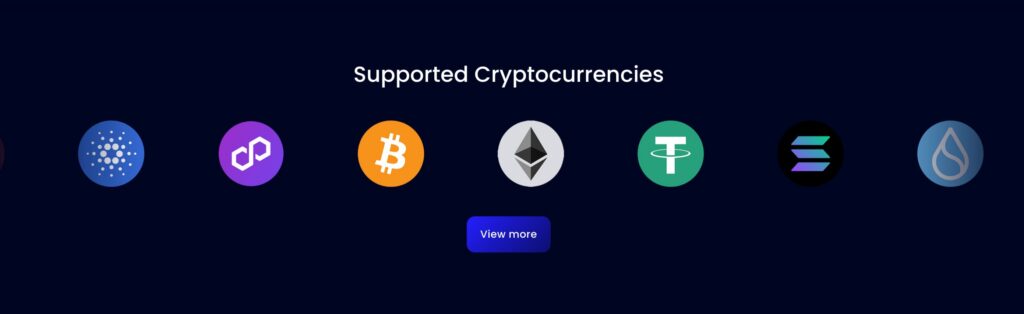
The platform accepts over 40 cryptocurrencies for funding the Web3 Mastercard, including Bitcoin (BTC), Ethereum (ETH), Solana (SOL), Tether (USDT), and numerous altcoins. This multi-currency capability allows users to spend whichever asset they prefer without first exchanging it for a specific payment token.
For merchant payments, the pay it now crypto system operates differently than some competitors. Businesses receive New Zealand dollars regardless of which cryptocurrency the customer used. This design eliminates merchant exposure to price volatility and simplifies accounting, as all revenue appears in standard NZD format on their records.
Crypto Payment Implementation Methods:
- Web3 Mastercard: Global spending capability at any Mastercard-accepting merchant
- Direct merchant integration: QR code or payment link for businesses within the PIN network
- In-app transfers: Peer-to-peer cryptocurrency movement between PIN users
- Bill payment: Upload invoices for crypto-based settlement
The platform’s positioning within pay it now crypto services emphasizes practical utility over speculative trading. While users can buy and sell assets for investment purposes, the infrastructure design prioritizes payment functionality. Transaction speed and low fees serve this objective, making small purchases economically viable where traditional blockchain fees would be prohibitive.
What Is the Pay It Now Coin?
The pay it now coin refers to the PIN token, which serves as the native cryptocurrency within the platform’s ecosystem. Built on Polygon’s Layer-2 scaling solution, PIN token launched with a maximum supply of 100 million tokens and functions as both a utility token and rewards mechanism.
PIN Token Specifications:
| Attribute | Details |
| Token Standard | Polygon-based (WMATIC) |
| Maximum Supply | 100,000,000 PIN |
| Primary Exchange | QuickSwap (decentralized) |
| Current Use Cases | Rewards, payments, transaction fees |
| Reflection Mechanism | Token holders earn from network activity |
What is the pay it now coin functionality extends beyond simple payment utility. The tokenomics structure includes a reflection mechanism where PIN token holders receive a portion of transaction fees generated across the network. This includes merchant payments, asset swaps, and in-store purchases made by any user within the ecosystem.
The pay it now coin operates on both the Polygon network and the PIN Network simultaneously through a 1:1 mapping system. Users can hold PIN tokens in either location, with the platform ensuring total supply remains consistent across both networks. This architecture allows external DeFi integration (via Polygon) while maintaining internal transaction efficiency (via Layer-2).
PIN Token Functions:
- Settlement currency for transactions within the PIN Network
- Reward distribution to participating users at merchant partners
- Staking rewards for token holders
- Transaction fee component within the ecosystem
- Trading pair on decentralized exchanges
The token launched through a crowdfunding campaign on PledgeMe before listing on cryptocurrency tracking sites like CoinMarketCap and CoinGecko. Price volatility has been significant since launch, with the token trading well below its all-time high as of December 2024. Users considering the pay it now coin should understand it functions primarily within the platform’s ecosystem rather than as a broadly adopted cryptocurrency.
Confusion often arises between “using Pay It Now for crypto payments” and “using the PIN token specifically.” The platform supports 50+ cryptocurrencies for general payments, while the PIN token serves specific ecosystem functions related to rewards and network participation.
Fees, Limits, and Transaction Speed
Transaction costs represent a critical factor for users evaluating the platform against alternatives. Pay it now reviews often focus on the fee structure, which differs significantly from both traditional payment processors and standard cryptocurrency networks.
Fee Structure Breakdown:
| Transaction Type | Fee | Comparison Point |
| Merchant Payments | 0.5% | Credit cards: 1.5-5% |
| Crypto Purchase | Spread (variable) | No separate trading fee |
| Currency Conversion | Included in spread | Banks: 1-3% forex fees |
| Network/Gas Fees | None | Ethereum: $1-50+ |
| Card Spending | Included | Standard debit: varies |
The platform operates on a spread-based revenue model rather than charging explicit trading fees. When users buy or sell cryptocurrency, they receive a rate that includes the spread-the difference between the buy and sell price. This means the quoted price already incorporates the platform’s fee, with no additional charges applied at checkout.
For merchant transactions, the 0.5% fee applies to businesses accepting payments, not to customers making purchases. This positioning makes pay it now reviews generally positive from the consumer perspective, as spending cryptocurrency through the platform costs less than using credit cards at participating merchants.
Transaction Limits:
Specific transaction limits aren’t publicly disclosed in standard documentation, likely varying based on account verification level and user history. AML compliance requirements typically impose limits on unverified accounts, with higher thresholds available after completing full KYC verification with New Zealand identification documents.
Processing Speed Analysis:
The platform claims 0.5-second settlement for merchant payments, significantly faster than traditional banking rails. This speed derives from the Layer-2 architecture, which doesn’t require external blockchain confirmation. For users, this means:
- Instant in-app transfers between PIN users
- Near-instant merchant payment confirmation
- Standard card processing speed for Web3 Mastercard (2-3 seconds at point of sale)
- Variable timing for cryptocurrency purchases depending on payment method
Withdrawal speeds to external wallets or bank accounts vary by type. Moving cryptocurrency off-platform to a personal wallet requires blockchain confirmation, typically 15 minutes to several hours depending on network congestion. NZD withdrawals to New Zealand bank accounts follow standard banking timelines of 1-3 business days.
Pay It Now vs Other Payment Methods in New Zealand
Comparing the platform to alternatives requires understanding distinct use cases. Pay it now nz occupies a specific niche between traditional payment processors and pure cryptocurrency exchanges, making direct comparisons context-dependent.
Comparison with Traditional Payment Methods:
For everyday purchases at non-crypto-accepting merchants, the Web3 Mastercard functions similarly to any debit card, with the distinction that funds originate from cryptocurrency holdings. Users who prefer holding assets in BTC or ETH can spend them anywhere without first converting to NZD manually.
Standard New Zealand payment options include:
- EFTPOS/debit cards: Direct bank account access, no conversion fees, limited to NZD
- Credit cards: Purchase protection, rewards programs, 1.5-3% merchant fees
- Bank transfers: Free for most NZ accounts, 1-3 day settlement
- Digital wallets (Apple Pay, Google Pay): Convenience layer over existing cards
Versus Other Crypto Payment Solutions:
| Feature | Pay It Now | International Crypto Cards | Pure Exchanges |
| NZ Focus | Designed for NZ market | Global, often USD-based | Varies |
| Merchant Network | 300+ local businesses | None (card-based) | None |
| Regulatory Status | NZ FSD registered | Varies | Often offshore |
| Spending Method | Card + direct payments | Card only | Must withdraw first |
The platform’s primary differentiation lies in its integrated approach. Unlike international services that require users to manage multiple platforms (exchange for buying, wallet for storage, card for spending), Pay It Now consolidates these functions. This integration comes with tradeoffs—users sacrifice some flexibility and platform choice for convenience. If the goal is primarily trading (not payments), many NZ users compare Swyftx against other venues; Coinbase NZ is one commonly mentioned alternative in that comparison set, particularly for broader market access and trading tooling, even though it doesn’t replicate Pay It Now’s local merchant network.
When Pay It Now Makes Sense:
- Users holding cryptocurrency who want NZ-based spending capability
- Merchants seeking low-fee payment acceptance with NZD settlement
- Individuals preferring a single platform for buying, holding, and spending crypto
- Those valuing AML compliance and New Zealand regulatory oversight
When Alternatives May Be Preferable:
- Users requiring self-custody of cryptocurrency assets
- Those needing access to advanced trading features or extensive coin selection
- International transactions where local NZ focus provides no advantage
- Individuals uncomfortable with platform custody of digital assets
The comparison framework highlights that pay it now nz serves a specific market segment rather than attempting to replace all payment methods. Its value proposition centers on making cryptocurrency practically usable in everyday commerce within New Zealand and Australia.
When Does Using Pay It Now Make Sense?
Practical application scenarios help determine whether the platform aligns with specific user needs. The service addresses particular pain points in cryptocurrency usage while introducing its own constraints and considerations.
Optimal Use Cases:
- Crypto Holders Seeking Spending Capability: Individuals who accumulate cryptocurrency through mining, trading, or payment for services can spend these assets at participating New Zealand merchants or globally via the Web3 Mastercard without manual conversion steps.
- Merchants Wanting Crypto Payments: Businesses seeking to accept digital asset payments while maintaining standard NZD accounting benefit from the automatic conversion and low 0.5% fee structure. The platform handles all cryptocurrency exposure and compliance.
- Users Prioritizing Local Compliance: Those concerned about regulatory status may prefer a New Zealand-registered Financial Services Provider over offshore alternatives. The AML compliance and domestic oversight provide a different risk profile than unregulated platforms.
- Reward Program Participants: Users shopping at the 55+ partnered retailers can access promotional offers and PIN token rewards, adding value beyond basic payment functionality.
Scenarios Where Pay It Now May Not Be Ideal:
- Advanced traders requiring sophisticated charting, margin trading, or extensive coin listings
- Users prioritizing self-custody and complete control of private keys
- International users outside New Zealand and Australia (limited access)
- Those seeking extensive customer support across multiple time zones
- Individuals uncomfortable with platform custody of assets
Practical Limitations to Consider:
The platform operates primarily during New Zealand business hours for support functions, though the app remains accessible 24/7. This timezone focus may disadvantage international users who encounter issues outside normal NZDT working hours.
Cryptocurrency selection, while extensive at 50+ assets, doesn’t match the hundreds or thousands available on major global exchanges. Users seeking specific altcoins or newly launched tokens may need supplementary platforms.
The Web3 Mastercard, while offering global spending capability, operates as a prepaid card. Users must preload it with cryptocurrency-converted funds rather than accessing a credit line. This structure eliminates credit card benefits like purchase protection or chargebacks in dispute situations.
Final Overview – Key Facts About Pay It Now in NZ
Pay it now operates as New Zealand’s largest blockchain-based payment network, founded in 2021 and serving over 300 businesses across New Zealand and Australia. The platform functions as a registered Financial Services Provider (FSD: 1002374) with AML compliance certification, distinguishing it from offshore cryptocurrency services. Users access the PIN Network App on iOS and Android devices to buy, store, and spend 50+ cryptocurrencies with direct NZD bank account integration, eliminating international wire transfer requirements.
The technical framework utilizes Layer-2 blockchain architecture, enabling 0.5-second merchant settlement without gas fees. The fee structure charges businesses 0.5% (significantly lower than 1.5-5% credit card rates) while users pay only spreads incorporated into exchange rates. The Web3 Mastercard allows global crypto spending with automatic NZD conversion for merchants. The PIN token serves as the ecosystem’s native cryptocurrency with staking rewards and transaction fee reflections, though holding it isn’t mandatory for platform use.
Service availability currently limits to New Zealand and Australia, with the platform emphasizing practical spending utility over speculative trading. Security combines standard financial application protocols with platform custody of user assets, meaning individuals trust operational security rather than controlling private keys. Users should recognize that cryptocurrency services lack traditional banking protections like Reserve Bank deposit insurance or Banking Ombudsman coverage, as regulatory frameworks continue evolving in New Zealand’s digital asset sector.
FAQ - Pay It Now NZ
- What is Pay It Now used for in New Zealand?
-
Pay It Now serves as a cryptocurrency exchange and payment processor enabling NZ residents to buy, sell, and spend digital assets. The platform provides Web3 Mastercard access for global spending, direct merchant payment integration across 300+ businesses, and rewards programs with participating retailers. Users access these functions through the PIN Network App with NZD bank account integration.
- Is Pay It Now safe for online payments?
-
The platform operates as a registered Financial Services Provider (FSD: 1002374) under New Zealand law with AML compliance certification. Security measures include multi-factor authentication, transaction monitoring, and KYC verification. However, cryptocurrency services lack Reserve Bank deposit insurance, and platform custody means users trust the company's operational security rather than controlling private keys directly.
- Can Pay It Now be used for crypto transactions?
-
Yes, the platform supports cryptocurrency transactions across 50+ digital assets including Bitcoin, Ethereum, and Solana. Users can make peer-to-peer transfers within the app, spend crypto at merchants via QR codes or the Web3 Mastercard, and swap between different cryptocurrencies. All merchant payments convert to NZD automatically at point of sale.
- Does Pay It Now have its own coin?
-
The PIN token serves as the platform's native cryptocurrency, built on Polygon's Layer-2 network with a maximum supply of 100 million tokens. PIN functions as a settlement currency within the ecosystem, provides staking rewards, and distributes transaction fee reflections to holders. Users can transact with 50+ other cryptocurrencies on the platform without holding PIN tokens.
- Is the Pay It Now app available in NZ?
-
The PIN Network App is available for download in New Zealand on both iOS and Android platforms. New Zealand residents can create accounts, verify identity with NZ documentation, connect local bank accounts, and access the full platform functionality including the Web3 Mastercard. The service currently operates only in NZ and Australia.
- What fees does Pay It Now charge?
-
The platform charges no explicit trading fees, instead earning through spreads-the difference between buy and sell prices. Merchant payments carry a 0.5% fee paid by businesses, not customers. No gas fees apply to in-app transactions due to the Layer-2 network architecture, and no foreign exchange fees are charged separately (incorporated into spreads instead).
- How long do transactions take on Pay It Now?
-
In-app transfers between PIN users complete nearly instantly. Merchant payments settle in approximately 0.5 seconds according to platform claims, with businesses receiving NZD immediately. Web3 Mastercard transactions process at standard point-of-sale speeds (2-3 seconds). Bank withdrawals follow traditional timing of 1-3 business days for NZD, while crypto withdrawals require blockchain confirmation (15 minutes to several hours).
- Can I withdraw my money from Pay It Now?
-
Users can withdraw both cryptocurrency and New Zealand dollars from the platform. Cryptocurrency withdrawals transfer to external wallet addresses with blockchain confirmation required. NZD withdrawals process to connected New Zealand bank accounts within standard banking timeframes of 1-3 business days. Transaction limits may apply based on account verification level and platform policies.
Author