OKX Exchange Review for New Zealand Users
This review examines OKX exchange from a New Zealand perspective. We cover how the platform operates, fee structures, wallet functionality, and whether it suits Kiwi crypto traders. Our team has tested OKX’s core features to provide factual insights for NZ users considering this platform.
This guide addresses common questions including what is OKX exchange, how transfers work between exchange and wallet environments, and whether the platform aligns with New Zealand regulatory expectations. We focus on practical information rather than promotional content.
What Is OKX Exchange?

OKX operates as a global cryptocurrency platform offering spot trading, derivatives, staking, and decentralized finance access. The crypto exchange OKX was founded in 2017 and has grown to serve millions of users worldwide. The platform provides trading for over 300 digital assets across multiple market types, covering a broad spectrum of crypto currency markets from large-cap coins to smaller altcoins.
Core services include spot markets where users buy and sell crypto at current prices, futures and options for leveraged trading, and earn products for passive income. OKX exchange also integrates a self-custody wallet with built-in DEX aggregator functionality. This combination of centralized trading infrastructure and decentralized tools distinguishes OKX from traditional exchanges.
The platform operates through web interfaces, desktop applications, and mobile apps for iOS and Android. New Zealand users can access most OKX features, though some limitations apply regarding fiat currency onboarding. The exchange maintains 24/7 trading across all supported markets.
Is OKX a Centralized or Decentralized Exchange?
Understanding the difference between centralized and decentralized exchanges helps clarify how OKX operates. Centralized exchanges (CEX) act as intermediaries, holding user funds and matching orders through internal systems. Decentralized exchanges (DEX) facilitate peer-to-peer trading through smart contracts without custodial control.
OKX functions as both. The main trading platform is a centralized exchange where users deposit funds into OKX-controlled wallets. The platform manages order books, liquidity, and trade execution through centralized infrastructure. This model provides speed, deep liquidity, and familiar trading interfaces.
However, OKX also operates a decentralized exchange component through its Web3 wallet. The OKX decentralized exchange feature aggregates liquidity from multiple DEX protocols, allowing users to trade directly from self-custody wallets. Users maintain private key control and execute trades through blockchain smart contracts rather than centralized order books.
| Exchange Type | Custody Model | Trade Execution | Liquidity Source |
| OKX CEX | Platform-held | Internal matching | Centralized order books |
| OKX DEX | User-held | Smart contracts | Multiple DEX protocols |
| Traditional CEX | Platform-held | Internal matching | Single order book |
| Pure DEX | User-held | Smart contracts | Single protocol |
This dual structure means is OKX a decentralized exchange is not a simple yes or no question. The centralized platform handles most trading volume, while the decentralized wallet provides DEX access for users prioritizing self-custody.
Is OKX a Good Exchange for New Zealand Users?
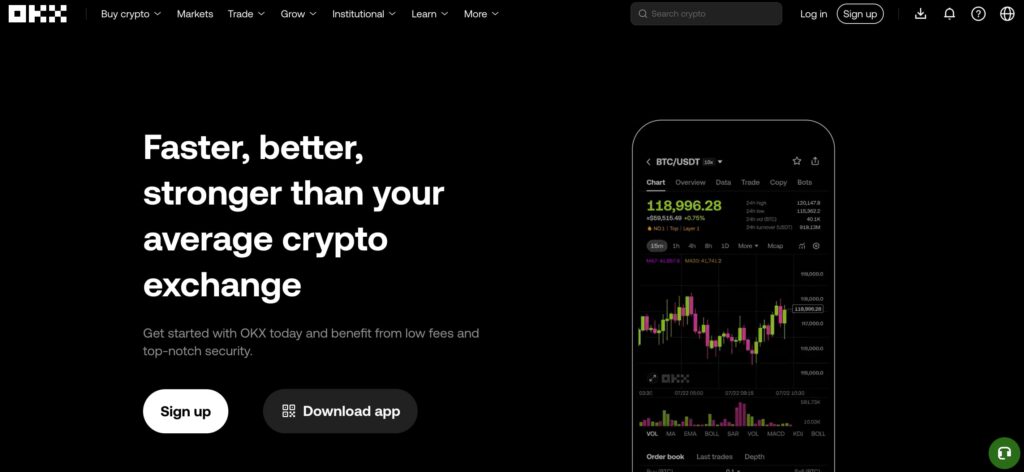
Determining whether is OKX a good exchange for Kiwi traders depends on individual needs and experience levels. OKX offers substantial trading features but lacks direct NZD banking integration. New Zealand users cannot deposit or withdraw New Zealand dollars directly through the platform.
Availability considerations for NZ residents:
- Account creation is permitted from New Zealand
- No specific restrictions target Kiwi users
- Trading available in crypto-to-crypto pairs
- Fiat onboarding requires third-party services or stablecoin conversion
For users researching how to buy crypto NZ before using OKX, the typical approach involves purchasing cryptocurrency through a local exchange or broker that supports NZD, then transferring those assets to OKX for trading. This extra step may be acceptable for experienced users but can slow down entry for beginners.
The platform suits experienced traders comfortable with crypto-to-crypto trading and willing to use alternative fiat onramps. Beginners preferring NZD deposits might find local exchanges more accessible initially. OKX exchange ranking places it among the top 10 global platforms by trading volume, indicating substantial liquidity and market depth.
Regulatory considerations remain important. While OKX operates globally, it does not hold specific licenses from the New Zealand Financial Markets Authority. Users should understand that trading occurs on an offshore platform. This arrangement is common for crypto exchanges but carries different protections than platforms regulated specifically for the New Zealand market.
| User Type | Suitability | Reasoning |
| Experienced traders | High | Advanced tools, low fees, deep liquidity |
| DeFi enthusiasts | High | Integrated DEX, Web3 wallet features |
| Crypto beginners | Medium | No NZD support, complex interface |
| Casual investors | Medium | Better local alternatives for simple buying |
How to Use OKX Exchange: Step-by-Step Overview
Learning how to use OKX exchange requires understanding the basic workflow from account setup through trading and withdrawals. The process follows standard cryptocurrency exchange patterns with some platform-specific features.
Basic usage workflow:
- Create an account using email address
- Complete identity verification if required
- Deposit cryptocurrency to your exchange wallet
- Navigate to trading markets and place orders
- Monitor positions and manage trades
- Withdraw funds to external wallets when needed
The platform separates funds across different account types. Your funding account receives deposits and sends withdrawals. Trading accounts hold assets actively used in markets. Earning accounts contain crypto allocated to staking or lending products. Understanding these distinctions prevents confusion when locating assets.
OKX Account Registration and Verification
Registration begins at the OKX website or through mobile applications. New Zealand users enter an email address, create a secure password, and verify email ownership through a confirmation link. The process takes minutes and does not initially require identity documents.
Account creation checklist:
- Valid email address not used on OKX previously
- Strong password combining letters, numbers, symbols
- Access to email for verification code
- Optional phone number for additional security
- Secure storage for account credentials
Know Your Customer (KYC) verification becomes mandatory for higher withdrawal limits and certain features. Basic accounts allow limited activity, while verified accounts unlock full platform functionality. New Zealand users provide government-issued identification such as a passport or driver license plus proof of address.
Verification processing typically completes within hours but may extend to several days during high-demand periods. The platform uses automated systems to check document authenticity and match personal details. Regional restrictions do not currently prevent Kiwi users from completing verification, though policies can change.
OKX Exchange Fees Explained
Understanding OKX exchange fees helps calculate true trading costs. The platform uses a maker-taker fee model where fees vary based on whether orders add or remove liquidity from order books. Maker orders that add liquidity generally receive better rates than taker orders that remove it.
Standard trading fees:
| 30-Day Volume (USDT) | Maker Fee | Taker Fee |
| Less than 100,000 | 0.08% | 0.10% |
| 100,000 – 1,000,000 | 0.07% | 0.09% |
| 1,000,000 – 10,000,000 | 0.06% | 0.08% |
| Over 10,000,000 | 0.05% | 0.07% |
Withdrawal fees vary by cryptocurrency and network conditions. Bitcoin withdrawals typically cost between 0.0002-0.0005 BTC depending on network congestion. Ethereum withdrawals range from 0.003-0.01 ETH. Smaller altcoins have proportional fees based on network requirements.
The OKX decentralized exchange charges differently. DEX trades incur blockchain gas fees paid to network validators plus protocol fees from the underlying DEX. These costs fluctuate with network activity and cannot be reduced through trading volume. Users should compare CEX versus DEX costs for specific trades.
No fees apply for crypto deposits. Trading fee discounts are available by holding OKB tokens or achieving higher trading volumes. New Zealand users pay identical fees to other international users without regional surcharges.
OKX Exchange to Wallet: How Transfers Work
Moving crypto from exchange custody to personal wallets represents an important security practice. The okx exchange to wallet transfer process allows users to take control of private keys and reduce exchange-related risks. Understanding custody differences helps inform asset management decisions.
Exchange custody means OKX holds the private keys controlling your crypto. You access funds through account login credentials but do not directly control the blockchain assets. This arrangement simplifies trading but concentrates risk if the platform experiences issues.
Wallet custody transfers control to you through private key ownership. Assets move from OKX addresses to blockchain addresses where only you hold the keys. This self-custody model eliminates exchange-related risks but increases personal responsibility for security.
Reasons to transfer from exchange to wallet:
- Long-term storage of crypto not actively traded
- Reduced exposure to exchange security incidents
- Access to DeFi protocols requiring wallet connection
- Participation in token launches or airdrops
- Complete ownership of private keys
How to Transfer from OKX Exchange to OKX Wallet
The okx transfer from exchange to wallet process within the OKX ecosystem uses the platform’s integrated wallet feature. This internal transfer moves crypto from the centralized trading environment to the self-custody wallet without blockchain transactions. The process completes instantly and incurs no network fees.
Internal transfer steps:
- Access the Assets section from main navigation
- Select Transfer between accounts
- Choose source account (Trading or Funding)
- Select destination (Web3 Wallet)
- Enter cryptocurrency type and amount
- Confirm transfer details and execute
Once assets reach the Web3 wallet, you control private keys and can access decentralized applications. The wallet supports multiple blockchain networks including Ethereum, Polygon, Arbitrum, and BNB Chain. Users can trade on the OKX decentralized exchange directly from this wallet interface.
Internal transfers do not appear on public blockchains. The movement occurs within OKX’s internal accounting system. This distinction matters for users tracking on-chain activity or requiring blockchain transaction records.
OKX Transfer from Exchange to External Wallet
Moving crypto to non-OKX wallets requires blockchain withdrawals. The okx transfer from exchange to external wallets process sends assets from OKX addresses to your personal wallet addresses. This action creates permanent blockchain records and incurs network fees.
Withdrawal process checklist:
- Obtain correct wallet address for chosen cryptocurrency
- Verify network compatibility (ETH, ERC-20, BEP-20, etc.)
- Ensure minimum withdrawal amounts are met
- Enable withdrawal permissions if restricted
- Double-check address accuracy before confirming
- Account for network fees in withdrawal amount
Common mistakes include selecting incorrect networks or sending tokens to incompatible addresses. ERC-20 tokens require Ethereum network selection, while BEP-20 versions need BNB Chain. Sending to wrong networks often results in permanent loss.
Security considerations include verifying addresses through multiple methods and using withdrawal whitelist features. OKX allows address whitelisting, restricting withdrawals only to pre-approved addresses. This setting prevents unauthorized withdrawals if account access is compromised.
OKX Transfer from Wallet to Exchange
The reverse okx transfer from wallet to exchange process deposits crypto from self-custody wallets to the centralized platform. Users send crypto from external wallets to their unique OKX deposit addresses. This action enables trading, conversion to other assets, or use of centralized earning products.
Deposit requirements:
- Correct cryptocurrency selection in OKX deposit interface
- Matching network between wallet and deposit address
- Sufficient network fees in wallet for transaction
- Awareness of minimum deposit amounts
- Confirmation tracking through blockchain explorers
Deposits typically require blockchain confirmations before crediting to accounts. Bitcoin deposits need 2-3 confirmations, Ethereum requires 12-64 confirmations depending on amount, and other networks vary. Larger deposits may require additional confirmations for security.
Security and Asset Protection on OKX
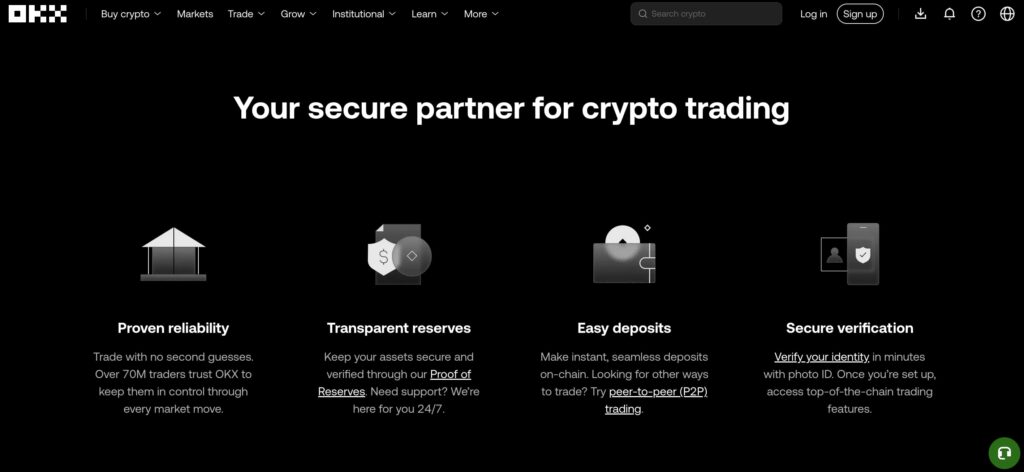
OKX exchange employs multiple security mechanisms to protect user assets and account access. The platform combines cold storage for most assets, hot wallet infrastructure for liquid trading, and various account-level security tools. Understanding these protections helps users make informed custody decisions.
Platform security features:
| Security Layer | Function | User Control |
| Cold storage | Holds 95%+ of assets offline | None – automatic |
| Two-factor authentication | Protects account login | User-enabled |
| Withdrawal whitelist | Restricts destination addresses | User-configured |
| Anti-phishing code | Verifies email authenticity | User-set |
| Device management | Controls authorized devices | User-managed |
Two-factor authentication (2FA) adds critical account protection. OKX supports authenticator apps and SMS verification, with authenticator methods recommended for better security. Enabling 2FA significantly reduces unauthorized access risk.
The custody model differs between centralized exchange and wallet modes. Exchange mode means OKX controls private keys and holds legal responsibility for assets. Wallet mode transfers control and responsibility entirely to users. This distinction affects both security and recovery options.
Users bear full responsibility for wallet mode security. Lost private keys result in permanent asset loss with no recovery mechanism. The platform cannot restore access to self-custody wallets, unlike exchange accounts where customer support may assist with account recovery.
Pros and Cons of Using OKX in New Zealand
Evaluating OKX crypto exchange from a New Zealand perspective reveals both advantages and limitations. Our testing identifies key factors Kiwi traders should consider before committing to the platform.
Advantages for NZ users:
- Extensive cryptocurrency selection beyond major assets
- Competitive OKX exchange fees compared to alternatives
- Advanced trading tools including futures and options
- Integrated Web3 wallet with DEX aggregation
- High liquidity across major trading pairs
- Mobile and desktop applications for flexible access
Limitations for NZ users:
- No direct NZD deposit or withdrawal options
- Requires cryptocurrency or stablecoin onboarding
- Not regulated specifically for New Zealand market
- Customer support response times vary by issue
- Interface complexity may challenge beginners
- Limited educational resources for Kiwi market specifics
The platform excels for experienced traders comfortable navigating crypto-to-crypto markets. The combination of centralized trading infrastructure and decentralized wallet features provides unusual flexibility. However, the lack of NZD integration creates friction for users preferring direct fiat access.
Who Should Consider Using OKX Exchange?
Certain user profiles benefit more from OKX than others. The crypto exchange OKX aligns best with specific trading styles and experience levels rather than serving as a universal solution.
Ideal candidates for OKX:
- Active traders requiring advanced order types and leverage
- DeFi users wanting integrated DEX access alongside CEX trading
- Experienced crypto holders comfortable with self-custody
- Users trading altcoins not available on smaller exchanges
- International traders working across multiple markets
Users who might prefer alternatives:
- Complete beginners seeking simple NZD buying
- Investors wanting passive buy-and-hold with fiat integration
- Users requiring New Zealand-specific regulatory oversight
- Traders prioritizing local customer support
- Those uncomfortable with cryptocurrency-only onboarding
Users who compare global platforms often evaluate alternatives alongside OKX. In this context, a Swyftx review is frequently referenced by New Zealand users as a comparison point, as Swyftx offers direct NZD onboarding and a simpler interface. While Swyftx prioritizes accessibility, OKX focuses on advanced tools, broader market access, and integrated Web3 functionality.
New Zealand has several locally-regulated exchanges offering direct NZD integration. These platforms may suit users prioritizing regulatory familiarity over advanced features. OKX exchange reviews consistently note the platform’s depth but acknowledge the learning curve.
Final Summary: Key Takeaways for NZ Users
This OKX crypto exchange review examined the platform from multiple angles relevant to New Zealand users. The exchange operates both centralized and decentralized services, offering extensive trading options without direct NZD support.
Core takeaways:
- OKX functions as both centralized exchange and DEX aggregator
- Trading fees are competitive at 0.08-0.10% for standard users
- No NZD onboarding requires crypto or stablecoin entry
- Platform suits experienced traders more than beginners
- Self-custody wallet provides genuine private key control
- Not specifically regulated for the New Zealand market
The okx exchange to wallet functionality works smoothly for both internal transfers and external withdrawals. Security mechanisms are robust but require user diligence, particularly when using wallet features. Understanding the distinction between exchange and wallet custody proves essential for effective use.
Frequently Asked Questions About OKX Exchange
- What is OKX exchange?
-
OKX is a global cryptocurrency platform offering spot trading, derivatives, staking, and decentralized exchange access. The platform supports over 300 digital assets and operates both centralized trading infrastructure and self-custody wallet features.
- Is OKX a decentralized exchange?
-
OKX operates both centralized and decentralized exchange services. The main trading platform functions as a centralized exchange, while the integrated Web3 wallet provides access to decentralized exchange protocols through a DEX aggregator.
- Is OKX safe to use?
-
OKX employs cold storage for most assets, two-factor authentication, withdrawal whitelists, and other security measures. The platform has operated since 2017 without major security breaches. However, users bear responsibility for account security and wallet private keys.
- Can New Zealand users use OKX?
-
Yes, New Zealand residents can create accounts and trade on OKX. However, direct NZD deposits and withdrawals are not available. Users must onboard with cryptocurrency or stablecoins from other sources.
- How do OKX exchange to wallet transfers work?
-
Internal transfers between OKX exchange and wallet occur instantly without blockchain transactions. External transfers require blockchain withdrawals with network fees. Users control private keys in wallet mode but not when holding assets on the exchange.
- What are OKX exchange fees?
-
Standard trading fees range from 0.08% maker and 0.10% taker for basic users. Fees decrease with higher trading volume. Withdrawal fees vary by cryptocurrency and network conditions, typically ranging from 0.0002-0.01 depending on the asset.
- How to transfer from OKX exchange to OKX wallet?
-
Navigate to Assets, select Transfer, choose your source account (Trading or Funding), select Web3 Wallet as destination, enter the amount, and confirm. The transfer completes instantly without network fees.
Author